AI Power, Human Pulse: The Risk of Imagination Poverty
Goc O’Callaghan was recently cited in Travel & Tourism News (TTN) TTN is the most established trade publication in the Middle East distributed on a controlled circulation basis to members of the travel and tourism industry. In TTN’s feature “AI Power, Human Pulse in Focus”, which explores the growing influence of artificial intelligence in the events and MICE industry following discussions at IBTM World. At the centre of O’Callaghan’s contribution is a warning from the IBTM Trends Report: the emergence of what she describes as “imagination poverty” within experience design.
Defining “Imagination Poverty”
As AI tools become increasingly embedded in event planning and delivery, O’Callaghan highlights a subtle but significant shift in how ideas are generated. While these tools bring clear efficiencies, supporting personalisation, logistics, and data-led decision-making, they are also beginning to influence ideation itself. This, she argues, can lead to a narrowing of creative thinking, where outputs become more uniform, predictable, and derivative. This is the essence of imagination poverty: not a lack of tools or capability, but a gradual loss of originality in how experiences are conceived.
AI and the Risk of Creative Convergence
The TTN article reflects this concern, noting wider industry debate around the rise of AI-generated content that can default to the statistically average rather than the intentionally distinctive.
O’Callaghan cautions that when teams rely too heavily on automated suggestions, there is a risk that event design begins to converge, using similar language, familiar formats, and safe creative choices that lack emotional depth or differentiation. This risks the death of the industry with stifled creativity. Our audiences are demanding more innovative and pioneering event and experience formats that challenge the participants, resulting in transformational experiences.
A Call for Intentional Creativity
O’Callaghan’s position is not anti-technology. Rather, she advocates for a more deliberate balance between AI capability and human creativity. AI, she argues, should be used to enhance efficiency and insight—not to replace the creative thinking that defines meaningful experiences. The future of the industry, she suggests, depends on resisting imagination poverty by ensuring that human intent, originality, and emotional intelligence remain at the core of event design. Because while AI can optimise what is produced, only human creativity can ensure it is truly imagined.
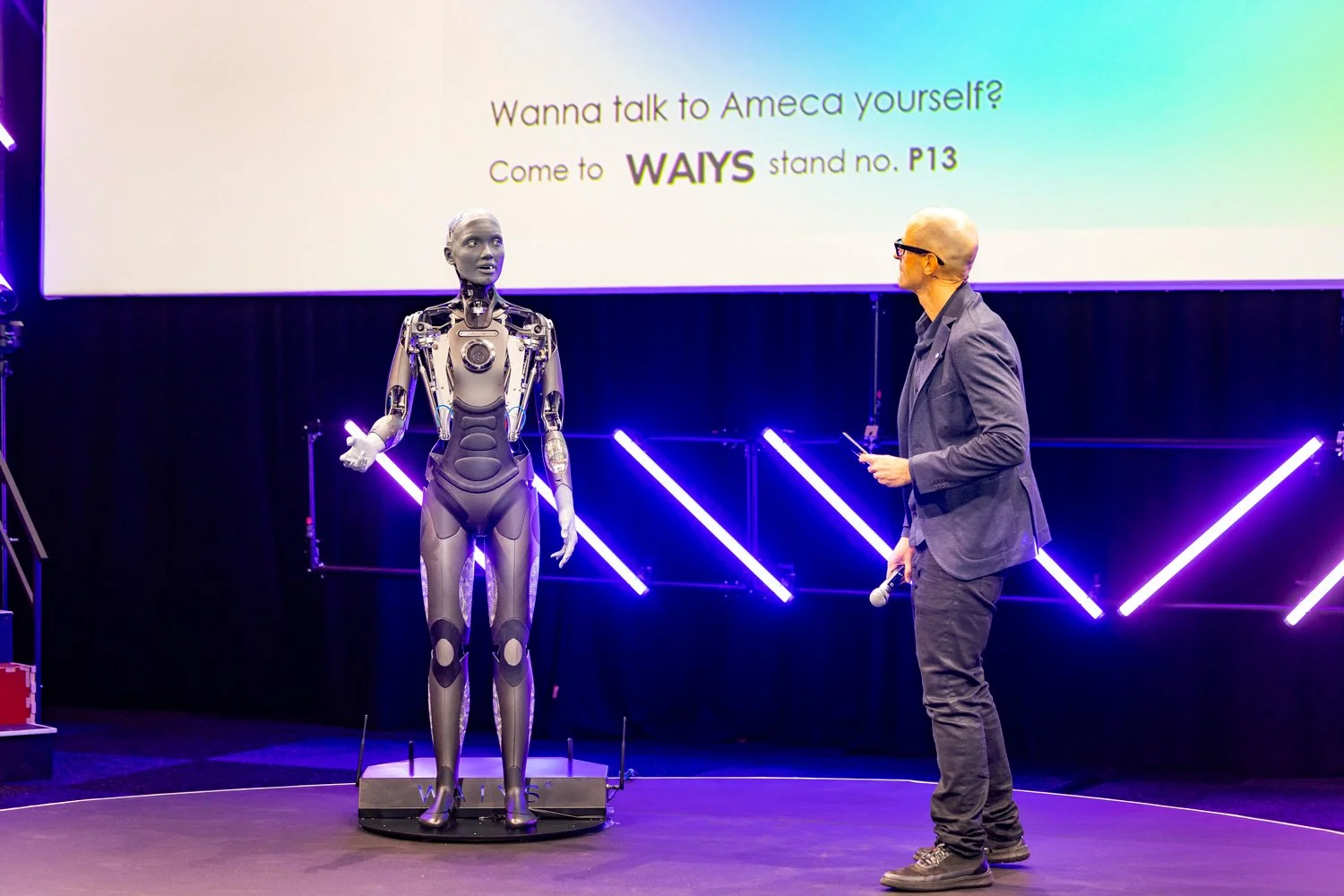
Image TTN ©